
Most people who have been to both will tell you the same thing in a slightly guilty whisper: the view from Gokyo Ri is better than the one from Kala Patthar. Better in the sense that you see more of Everest, more of the glacier, and four 8,000m peaks at once from a single spot. EBC is more famous, more emotionally charged, and more of an achievement — but for pure mountain viewing, Gokyo wins. If you can only do one Khumbu trek and you care more about the view than the destination, go to Gokyo.
The lakes
There are six Gokyo Lakes strung along the edge of the Ngozumpa Glacier — the longest glacier in Nepal at around 36km. The third lake, Dudh Pokhari, is the one you base yourself at: it sits at 4,700m below Gokyo village, and the colour of it is the kind of turquoise that makes people stop walking and take photographs for ten minutes. On a clear morning with the wind down and the peaks reflected in the water, it is one of those places you will describe to people for years and never quite get across.
The lakes are sacred. During the full moon of Janai Purnima in August, Hindu pilgrims make the trek up here to bathe in the holy water and perform puja. Tibetan Buddhist tradition also considers them sacred — the entire Khumbu region sits within Sagarmatha National Park, a UNESCO World Heritage Site, and the lakes form part of the Ramsar-listed wetland in the Sagarmatha National Park.

Gokyo Ri: the climb and the view
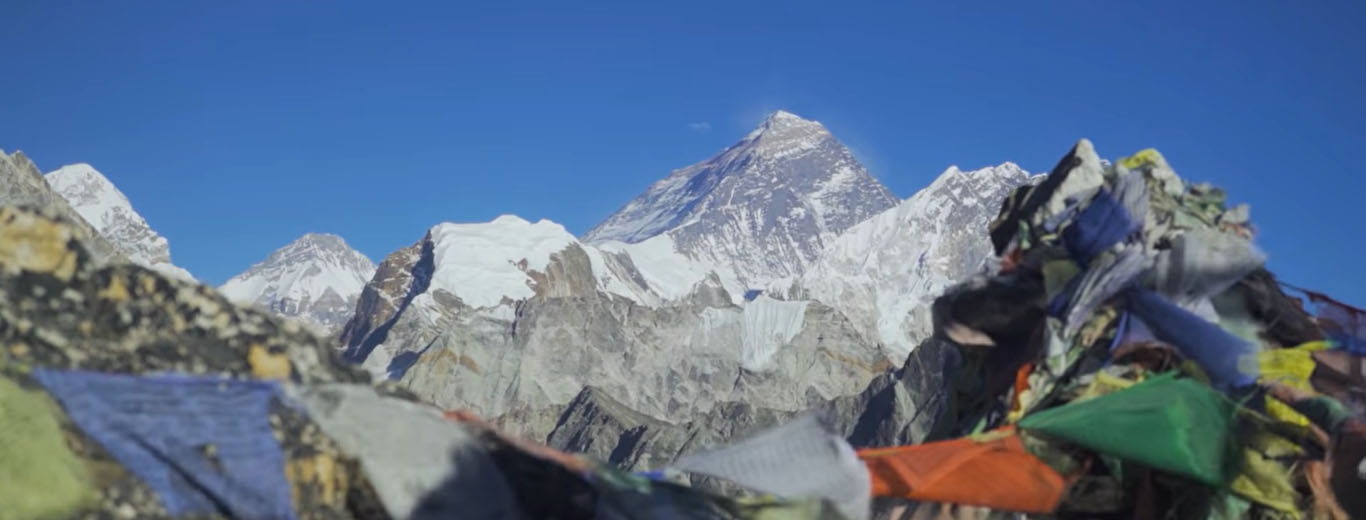
Gokyo Ri (5,357m) sits directly above the village and takes two to three hours to climb at altitude pace — short steps, long breaths, a lot of stopping to pretend you are looking at the scenery rather than recovering. The summit is a relatively flat rocky area marked by prayer flags. From here: Everest, Lhotse, Makalu and Cho Oyu all visible simultaneously, the Ngozumpa Glacier spreading out below you like a dirty white river, and the chain of lakes glinting in the valley. On a clear morning this is one of the finest viewpoints in Asia.
Getting to Gokyo: the route
The standard route flies Kathmandu to Lukla, then follows the EBC trail as far as Namche Bazaar. At Namche the route diverges: instead of heading northeast toward Tengboche and EBC, you head northwest up the Gokyo Valley through Dole and Machherma. The trail is quieter than the EBC route and the scenery changes quickly — by the time you reach Machherma you are in open yak pasture above the treeline with peaks on three sides.
Total trekking time from Lukla to Gokyo is 5 to 6 days, which means a return trip takes around 12 days including acclimatisation. Alternatively — and this is the version we recommend for experienced trekkers — you combine both valleys and return via Kala Patthar and EBC, making a loop through the Khumbu rather than doubling back the same way.
The Three Passes: the ultimate Khumbu circuit
If you have good fitness and 18 to 22 days, the Three Passes Trek links the Gokyo Valley with EBC by crossing three high passes: Renjo La (5,360m), Cho La (5,420m) and Kongma La (5,535m). It is the most complete way to experience the Khumbu — you see the whole region from the high ground rather than following one valley in and out. The passes require care: Cho La in particular has a short glacier crossing that needs crampons in early spring and late autumn. IATE runs this as a guided expedition with careful scheduling to avoid the bottlenecks at the passes that happen when trekking groups all move together.
Gokyo Lakes or Three Passes — we will help you decide
Both options are extraordinary. The right one depends on your available time, fitness level and what you want from the trek. Our guides have done both routes hundreds of times and will give you an honest recommendation based on your profile. No sales pitch — just good advice.


