There are three kinds of trekkers who end up on the Manaslu Circuit. The ones who came specifically for the restricted-area permit and the off-the-beaten-path experience. The ones who did Everest Base Camp and Annapurna and wanted something wilder. And the ones who got talked into it by someone who had already done it and would not stop going on about it. All three kinds finish the trek in the same state: quietly convinced it was the best thing they have ever done, and slightly reluctant to tell too many people about it in case it gets crowded.
What makes Manaslu different
Manaslu (8,163m) is the eighth highest mountain in the world. Unlike Everest, which has been exhaustively documented, photographed and commercially saturated, Manaslu remains relatively obscure outside trekking circles. The circuit that loops around it passes through villages where Tibetan Buddhist culture has been practised continuously for centuries — partly because the difficult terrain and restricted access kept the outside world out for a long time.
You need a special restricted-area permit to enter the Manaslu Conservation Area, plus a Manaslu Conservation Area Permit (MCAP) and an Annapurna Conservation Area Permit (ACAP) for the final section of the circuit. This adds cost and requires some advance planning — but it also keeps the numbers down. On a normal day in October you might pass 30 or 40 other trekkers on the whole route. On the EBC trail in the same season you would pass a thousand.

The route
The circuit typically takes 14 to 18 days and starts with a drive from Kathmandu to Soti Khola (700m) — a five to seven hour journey on roads that are scenic but rough. From there the trail climbs through increasingly remote river gorges, passing villages that run on yak dung fuel and prayer flags, until it reaches the high grazing settlements above 4,000m.
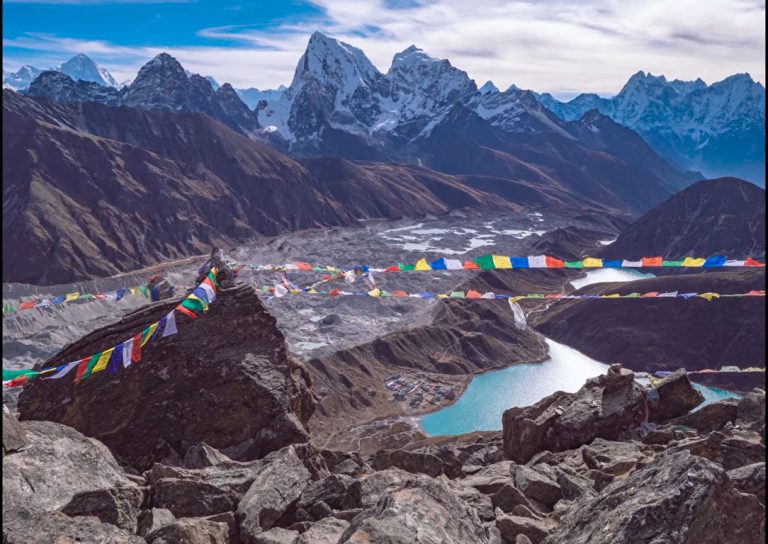
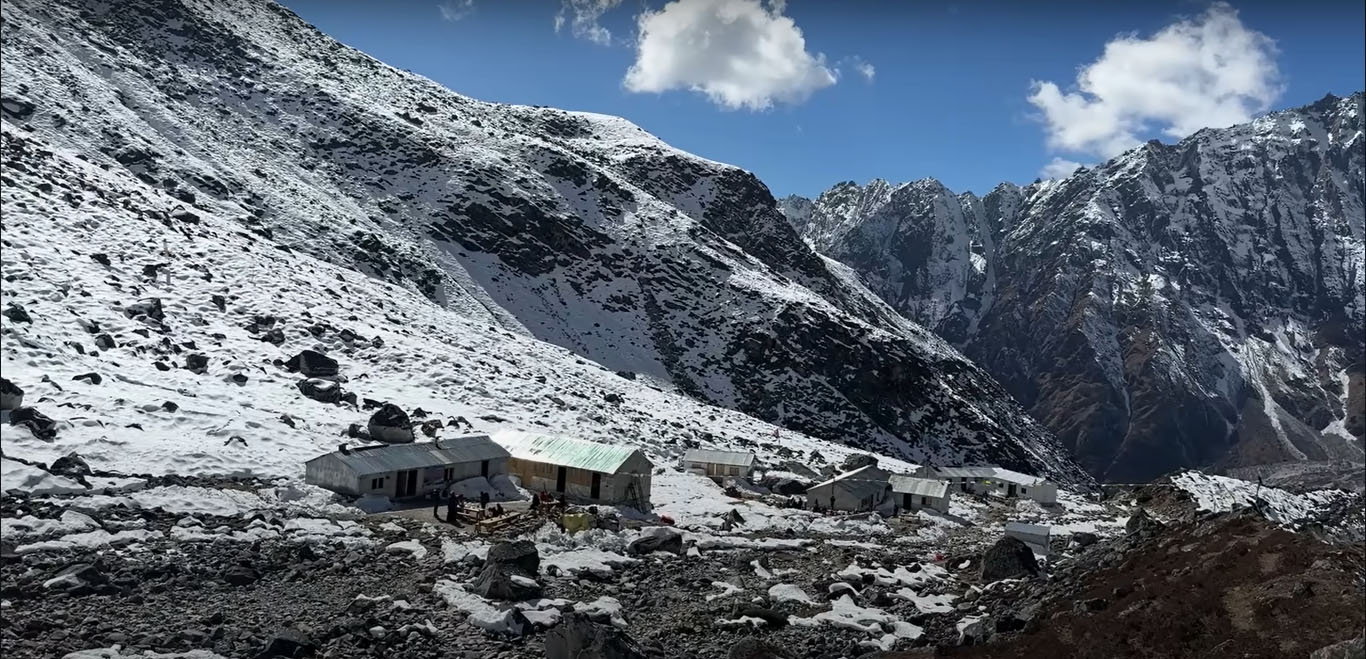
The high point is Larkya La Pass at 5,160m, which you cross on day 10 or 11 depending on your itinerary. The ascent from Dharmasala (4,460m) takes four to six hours and the descent to Bimthang on the other side is steep and can be icy in early season. The views from the pass on a clear day cover a 180-degree sweep of 7,000m and 8,000m peaks including Manaslu itself, Himlung, Cheo Himal and Annapurna II.
Tsum Valley: the side trip worth taking
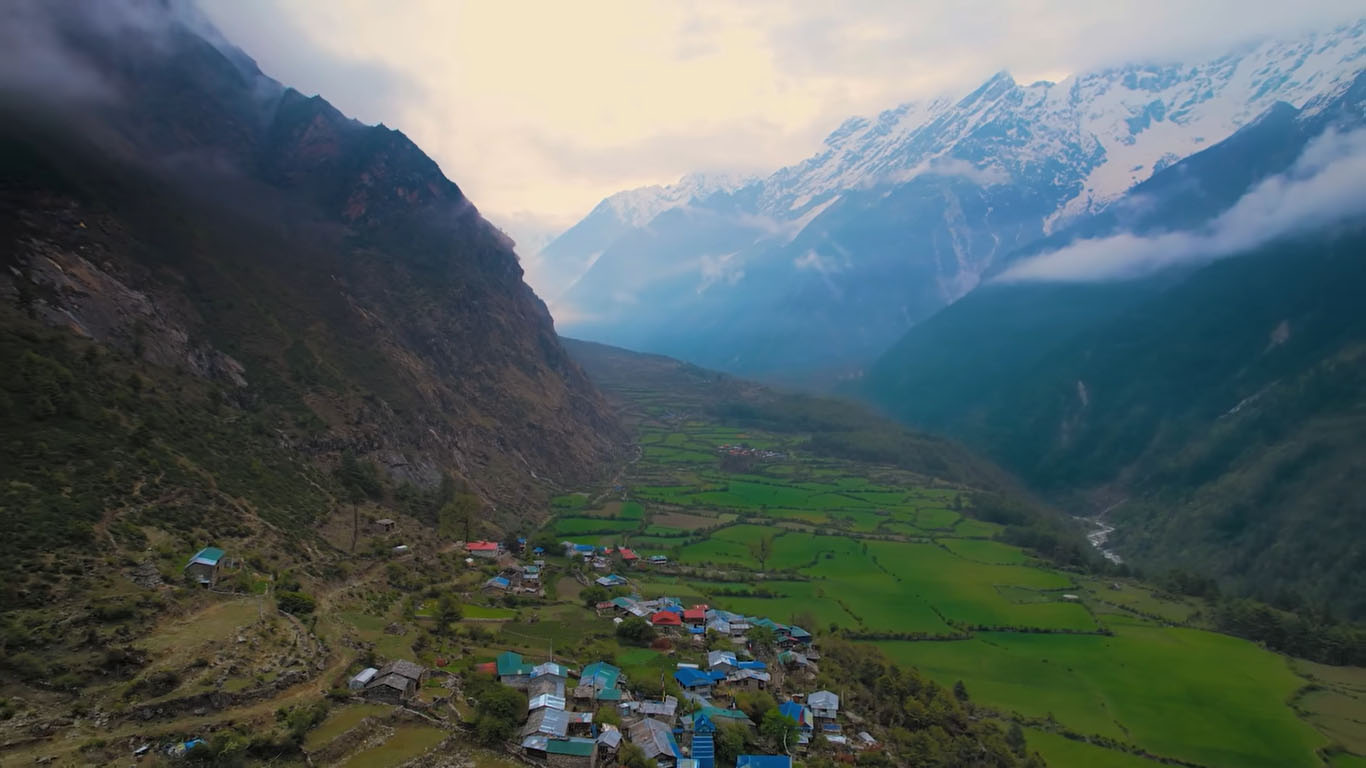
The Tsum Valley branches off the main Manaslu circuit and leads to one of Nepal’s most isolated communities — a sacred hidden valley called Beyul Kyimolung in Tibetan tradition. The Tsumba people who live here have maintained a distinct culture, language and religious tradition almost entirely separate from the rest of Nepal. Trekking here requires an additional restricted-area permit and an extra five to seven days, but the experience of walking into a community this intact and this ancient is unlike anything else in the Himalaya.
Tea houses and food on the Manaslu Circuit
The lodges on this route are nowhere near as polished as those on the Everest or Annapurna trails. In the lower sections they are comfortable enough — proper rooms, decent food, occasional hot showers. As you climb above 3,500m the quality drops off. Dormitory rooms, no heating, basic menus. Dal bhat is always available and always the best option. Above Samagaon (3,530m) the menu shrinks to noodle soup, rice and whatever tinned goods the lodge managed to stock up on.
This is not a criticism — it is part of the point. The Manaslu Circuit has not been built for people who want comfort. It has been built for people who want mountains, silence and genuine remoteness. If that is what you are looking for, you will find it here in quantities that the more popular routes simply cannot offer any more.
The permit process is complicated — let us handle it
The Manaslu restricted-area permit requires a minimum group of two trekkers and a licensed guide. IATE handles all the paperwork, arranges the permits in Kathmandu, and pairs solo travellers with compatible partners when needed. Contact us at least 4 weeks before your intended start date.